IMPACT OF THE DEMOGRAPHIC VARIABLES ON THE EMPLOYEE ENGAGEMENT - AN ANALYSIS
A. Marcus and Namitha M. Gopinath
Department of Commerce, Loyola College, Chennai
10.21917/ijms.2017.0068
Abstract
Employees play a pivotal role in the success of every organization. They help to achieve organizational objectives. Various studies indicate that a highly-engaged employee can help the organization to respond to the changes in environment, competition, and changing workforce. The extent to which an employee believes in the mission and purpose of an organization and demonstrates commitment through their action and their attitude towards their employer is employee engagement. The aim of this paper is to understand the impact of demographic variables such as age and gender on employee engagement in IT companies in South Chennai. The drivers considered for the study are superior, performance appraisal and reward and recognition. The study was conducted among employees working in various IT companies situated in South Chennai. The data was collected using a structured questionnaire and was analysed using appropriate statistical tools. It was observed that the age of the respondents has an influence on the drivers of employee engagement. It was further noted that gender has no impact on the selected drivers of employee engagement. However, the female respondents are found to be more influenced by the employee engagement initiatives by the IT companies in Chennai.
Keywords:Employee Engagement, Demographic Variables, Drivers of Employee Engagement
1. INTRODUCTION
India is the world's largest sourcing destination for the Information Technology (IT) sector. The industry employs about 10 million workforces. The sector has led the economic transformation of the country and altered the perception of India in the global economy. The IT companies are witnessing unprecedented change in terms of the global nature of work and the diversity of the workforce. They need employees who are flexible, innovative, willing to contribute and work beyond their formal job descriptions or contracts of employment. The ability to attract, engage, develop and retain talent will become increasingly important for gaining competitive advantage. The IT companies are in search of new ways to engage their employees.
Employee engagement is the state in which individual are emotionally and intellectually committed to the organization. Employee engagement is inclusive of long-term emotional involvement and is an antecedent to more temporary generalities of employee sentiment, such as job satisfaction and commitment. Engaged employees come to work every day feeling a connection to their organization, have a high level of enthusiasm for their work and perform at high levels. Initially, the organizations need to identify the key drivers of engagement for their company to increase the level of engagement among its employees. From the review of literature, it is found that the prominent drivers of employee engagement are superior, performance appraisal and rewards and recognition. Hence, for studying the impact of the demographic variables on the employee engagement among IT employees in South Chennai, these drivers are considered. Various studies [3-7] consider the effect of the demographic variables on the employee engagement of IT employees. The review of literature showed that studies on the impact of demographic variables on employee engagement among IT employees in South Chennai are non-existent. This paper is an attempt to understand the impact of the demographic variables based on the selected parameters for the study.
2. LITERATURE REVIEW
Kahn [1] is the pioneer in studies on employee engagement. He has defined “engagement” as “harnessing of organizational members’ selves to their work roles; in engagement, people employ and express themselves physically, cognitively, and emotionally during role performances”. Saks [2] has defined employee engagement as “a distinct and unique construct consisting of cognitive, emotional, and behavioural components associated with individual role performance”. Employee engagement is critical for the success of any organization in today’s competitive environment.
Studies conducted by academicians and research agencies show that there is no standard pattern for deciding which specific policies and practices will have most impact on employee engagement. The employees are influenced by different combinations of factors, known as drivers of employee engagement. The organisations need to consider which of these drivers are important for engaging their staff.
The various drivers of employee engagement are organization, management, superior, career development, reward and recognition, performance appraisal, training and monetary benefits. However, the recent studies conducted in employee engagement hints that there is a change in the relevance of the drivers of employee engagement. The impact of superior, reward and recognition and performance appraisal on employee engagement have been highly discussed worldwide. According to the 2013 Blessing White report on employee engagement [3], there is an increase in trust of employees in superiors. The top contribution drivers according to this survey were superior, reward and recognition and performance appraisal. When an employee contributes, and is recognized for his/her contribution, it naturally drives employee engagement. The study also suggested the re-assessment of performance appraisal strategies to ensure that it does not hinder the engagement efforts
In the 2013 report “Keys to Performance Management” by research firm i4cp [4], it was observed that only 55 percent of respondents agreed that existing performance appraisal processes had a positive impact on their organizations. It was further noted that only 29% of the respondents reported that their employees find their performance management system to be fair.
The Towers Watson 2014 Global Workforce Study [5] provides a detailed view into the employee and employer perspectives on the emerging trends and issues shaping the global workplace. The study highlights the need for strong supervisors for sustainable engagement in companies. The study advocates that superior is a key driver of employee engagement. The support from the superior leads to satisfaction in reward and recognition and feedback through appraisal of performance. In the study, it was observed that 30% of employees reported lack of supervisor support which is a cause of work-related stress. It was also noted that in organizations where superiors are perceived by employees as effective, 72% of employees are highly engaged
The report on 2015 Trends in Global Employee Engagement by AON [6] highlights the importance of superiors or leaders in engaging employees. It is pointed out that efficient superiors are the key driver to create a culture of engagement that sustains business results in an ever-changing and complex environment. The report stresses that superior can encourage a performance-oriented culture that matches results with rewards and recognition. They are critical ingredients to creating a culture of engagement.
According to the 2017 Brandon Hall survey on rewards and recognition [7], an average of nearly 7 percent of an organization’s HR budget is dedicated to rewards and recognition, and nearly 32 percent of organizations expect that budget to increase. More than half (56 percent) of the organizations are found to be using Rewards and recognition technology solutions. The study points out that there is an increase in employee engagement (75 percent) by implementation of the rewards and recognition in a substantial percentage of organizations. This shows the relevance of reward and recognition in engaging employees. The drivers considered in the study are superior, reward and recognition and performance appraisal, based on the literature review and recent studies in employee engagement.
The literature review of the drivers of employee engagement has highlighted the following:
- Superior - The role of the supervisor has always been highlighted as being key drivers of employee engagement. The supervisor who has genuine commitment to the employees’ well-being and interacted with the employees had influence on employee engagement. According to Xu and Cooper [8], the engagement among the employees increase when they feel involved through a collaborative leadership style. Trust in the superiors, their support and a friendly environment lead to employee engagement. Efficient supervisors can lead to motivation, job satisfaction, organizational commitment, proactive behaviours among the engaged employees. MacLeod and Clarke [9] have noted that superior is the most important driver of employee engagement that provides a strong strategic narrative which has widespread ownership and commitment from employees at all levels.
- Performance Appraisal - The performance appraisal process should have a positive association with the trust of the employees. Gomez-Mejia et al. [10] opine that when the employee feels that the performance appraisal system reflects the performance, the trust for those responsible for the appraisal system will be enhanced and hence the employee will be engaged to the work and the organization. Engaged employees can help the organization to achieve its mission, execute its strategy and generate important business results. The organizations need to incorporate employee engagement in the performance appraisal process by providing its employees support and resources to fully engage themselves in their job and the organization. Robinson et al. [11] stressed on efficient HR practices such as performance appraisals as important driver of employee engagement.
- Rewards and Recognition - Employees vary in their engagement based on their perceptions of the benefits they receive from work. Kahn [1] suggests that the benefits include rewards and recognition in addition to meaningful work. Therefore, the employees’ will be more likely to engage themselves at work to the extent that they perceive a greater amount of rewards and recognition for their role performances. When employees receive rewards and recognition from their organization, they will feel obliged to respond with higher levels of engagement. Lack of appropriate rewards and recognition may lead to disengagement.
The literature review on the drivers of employee engagement points towards the growing relevance of the three factors, namely superior, rewards and recognition and performance appraisal. In this study, an attempt is made to understand the impact of the demographic variables on the chosen drivers of employee engagement among employees in IT sector in South Chennai.
Demographics are the important factors taken into consideration in most human resource and management decisions because they influence work behaviour and productivity of the employees. The studies by Kahn [1] and Schaufeli and Bakker [12] suggest that the level of work engagement is affected in general terms by the demographic characteristics of the respondents. Bakan et al. [13] observed that employees’ personal characteristics such as age, gender, and job tenure can have significant effect on organizational commitment. Studies by Asadi et al. [14] and Eker et al. [15] show that demographic variables like gender, age, designation, education, marital status and numbers of years in organization of the employees are vital in determining the satisfaction of employees. The demographic variables age and gender were chosen based on the relevant literature review as given below:
Age of the Employees - Age of the employee is an important paradigm of individual difference. Mathieu and Zajac [16] suggested that the employees will have lesser employment options as they grow old, which may lead them to view their current employment more favourably. Robinson et al. [11] studied the relationship between age and employee engagement. They noted that there are significant differences in engagement scores according to the age group of the employees. They found that the engagement levels go down slightly as employees get older, while the highest engagement levels are displayed when they reach the oldest group, 60 and over. Ahuja et al. [17] observed that age had a modest but significant effect on turnover intention in the IT industry in India. They found that there are different perceptions of job satisfaction and motivation across the age spectrum.
Gender Differences - Gender differences have been found to determine level of employee engagement. Mathieu and Zajac [16] have reported women as being more committed than men. This is typically explained by women having to overcome more barriers than men to get to their position in the organisation. Igbaria and Baroudi [18] investigated the impact of gender on job performance evaluations, job performance attributions and career advancement prospects in IT sector. They noted that women are perceived to have less favourable chances for promotion than men. Garg [19] found that the gender differences are significant for three constructs, namely; job security and career development, work-life balance and wellbeing. The study revealed that women are significantly less engaged in terms of these three variables. It highlighted the problem faced by them at the work place in the form of glass ceiling. They also find it difficult to manage both home and work.
Thus, it is observed from the above reviews of literature on both demographic variables and drivers of employees can influence the employee engagement among the employees. Ferguson [20] stated that individual differences may have significant effects on employee engagement. The review of literature has helped the identification of the need of the study.
3. NEED OF THE STUDY
India has a pool of highly qualified technical graduates, which is one of the largest in the world. This has facilitated the growth of the IT sector in the country. The sector is one of the major contributors to the growth of the Indian economy.
The review of literature points out that research on drivers of employee engagement has been conducted on the impact of demographic factors such as position and length of service in the organization. However, it has been observed from the previous studies conducted globally that age and gender have a crucial influence on employee engagement. Therefore, it is necessary to consider impact of these demographic variables.
Chennai is home to many IT companies, especially the Southern part of the district. The support from the Tamil Nadu Government and the infrastructural facilities has made the city a favoured destination for the IT sector. The companies have custom-made engagement strategies for their employees. However, the IT companies are facing the problem of retaining their most valuable resource, namely, employees. Therefore, there is a need to understand the perception of the employees on the employee engagement initiatives of the IT companies in South Chennai. As a person’s perceptions can be influenced by the demographic factors, the study focuses on the impact of the demographic variables on employee engagement. The objectives of the study are as given below:
- To understand the impact of demographic variables like age and gender of the IT employees in South Chennai
- To investigate the relationship of the drivers of employee engagement with each demographic variable.
The following sections provide the outline of the research design followed and the analysis of the data collected.
4. RESEARCH DESIGN
The following section throws light on the research design for the study.
1) Hypotheses of the Study - The hypotheses framed to achieve the objectives of the study are: H1: Age does not influence employee engagement among employees in IT companies in South Chennai. H2: Gender has no influence on employee engagement among employees in IT companies in South Chennai.
2) Sampling Design - The employees working in the IT sector in South Chennai is the target population. Taking into consideration the time factor for the study, the sample consists of the companies on the South Chennai. The population of the employees working in this sector is very vast and therefore, to get a clear understanding of the employee engagement practices in the sector, a sample size of 600 has been fixed. The sample was selected at random.
3) Framing the Questionnaire - The questionnaire consists of two parts, namely Part A and Part B. Part A included 10 questions on the demographic variables such as gender, age, marital status, educational qualification, designation and experience in the company. Part B consisted of statements relating to the drivers of employee engagement, namely, supervisor, rewards and recognition, performance appraisal and employee engagement.
4) Pre-test of the Questionnaire - The study is conducted in South Chennai in select IT companies. The structured questionnaire was pre-tested among 10 employees from the IT sector and 4 experts from various fields of expertise - Commerce, Human Resource and Statistics. The questionnaires were filled through personal interaction with employees. During the pre-test, it was found that certain questions were repetitive. The suggestions given were included in the questionnaire. The pre-tested questionnaire was then circulated for pilot study.
5) Pilot Study - The pilot test was administered to 50 employees from the IT sector. Pilot testing was carried out to ensure that the survey items were relevant. The sample was selected using stratified random survey and it intended to record the responses of employees from all the levels of organizational hierarchy. Out of the 50 questionnaires, two were discarded as the respondents did not answer about 30% of the questions. All the items were then checked for perceived repetitions, and the researcher found that there was no such question, and that each question had been answered. The internal reliability test was conducted using Cronbach’s Alpha. The Cronbach Alpha value for all the drivers were found to be above 0.7 and hence the questionnaire was found to be statistically reliable.
6) Data Collection - The data was collected from 600 respondents from 33 IT companies located in South Chennai. The data collected by circulating the questionnaire among the respondents.
The research methodology followed is presented in Fig.1.
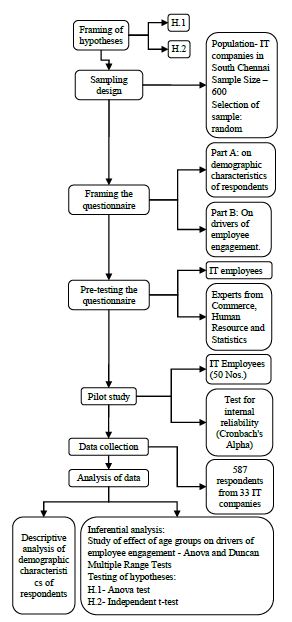
Fig.1. Research Methodology
5. ANALYSIS
The data was collected from 587 respondents working in various IT companies in South Chennai were analysed as under:
5.1 DEMOGRAPHIC CHARACTERISTICS OF THE RESPONDENTS
The Fig.2 depicts the demographic characteristics of the respondents based on the age and gender. The age of the respondents has been divided into four groups, namely; <25 years, 25-34 years, 35-45 years and >45 years.
From Fig.2, it is noted that the more than 50% of the respondents are men. The proportion of the female respondents participating in the study is also relatively high, which shows the increased participation of women in the IT field. The majority of the respondents are found to belong to <25 years. This shows that the sector employs mostly a younger workforce.
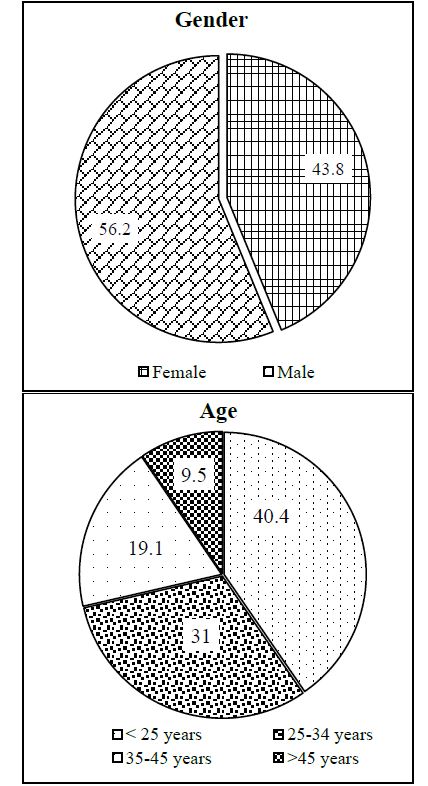
Fig.2. Demographic characteristics of the respondents (in percentage)
5.2 TESTING OF STATISTICAL SIGNIFICANCE
One-Way Analysis of variance (ANOVA) is used to analyse how the mean of a variable is affected by different combinations of factors. In the study, the relationship of demographic variable, namely - age and each of the drivers of engagement are analysed. There are four age groups in this study (namely; <25 years, 25-34 years, 35-45 years and >45years) and, Duncan’s Multiple Range Test is used to identify the pairs of means that are different. The following sections throw light on the relevance of the drivers of employee engagement based on the age of the respondents using ANOVA and Duncan’s Multiple Range Test.
(a) Age and Superior - In this section, the opinion of respondents on their superior is analyzed based on the age groups, using Anova and Duncan Multiple Range Tests. The descriptive statistics of all the statements related to superior and Duncan Multiple Range test results are in Table.1.
It is noted from Table.1 that the p values for all the statements except “Employee interest is always considered in decision-making process” is 0.000 which is less than 0.01 and statistically significant. The result indicates that there is significant difference among the age group of the respondents with respect to superior. The p value for the statement “Employee interest is always considered in decision-making process” is greater than 0.05 and statistically insignificant and it is concluded that there is no significant difference among the age group of the respondents with respect to “Employee interest is always considered in decision-making process”. The Duncan Multiple Range Test is calculated for the all the statements except “Employee interest is always considered in decision-making process”. The age group >45 years is significantly different from the age groups 25-34 years and 35-45 years. The age group 25-34 years differs significantly from the age groups 35-45 years and >45years. Simultaneously, the age group 35-45 years differs significantly from the age groups 25-34 years and >45years. The age group <25 years differs significantly from the age groups 25-34 years and 35-45 years. It is can be inferred that there are significant differences between the age groups towards the influence of superior on employee engagement among employees in IT companies in South Chennai.
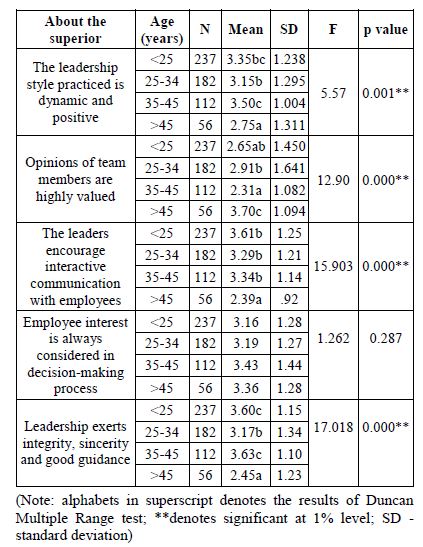
Table.1. Statistical Significance of Relationship between Age and Superior
The results given in Table.1 indicate that the employees working in the IT companies in South Chennai consider superior and the leadership style as an important driver of employee engagement. The respondents value the leadership style of the superior which values their opinion, encourages communication and provides guidance to the employees. They opine that the leadership style followed by the superiors is dynamic and positive. However, the results indicate that their interests are not considered in decision making process. Hence, the IT companies in South Chennai need to ensure that the superiors always give priority to the employees’ interests to effectively engage their employees.
(b) Age and Performance Appraisal - ANOVA test is used to identify whether there is any significant difference among the age groups of the respondents with respect to performance appraisal factors. The descriptive statistics of all the statements of organizational factors and Duncan Multiple Range test results are given in Table.2.
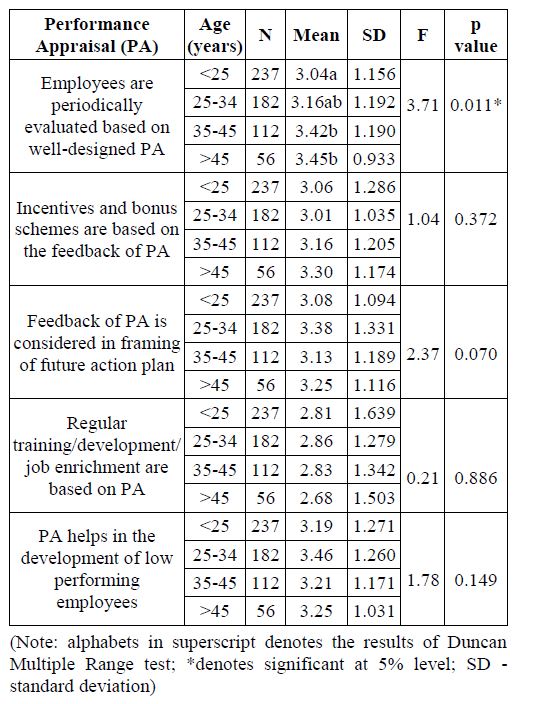
Table.2. Anova Test (Impact of Age on Performance Appraisal)
According to Table.2, the p value for “Employees are periodically evaluated based on well-designed PA” is 0.011 which is less than 0.05 and significant at 5% level and there is significant difference among the age group of the respondents with respect to relationship between performance appraisal and employee engagement. The p values for rest of the statements are greater than 0.05 and statistically insignificant. It is concluded that there is no significant difference among the age group of the respondents with respect to these statements. The Duncan Multiple Range Test, is therefore conducted on the statement “Employees are periodically evaluated based on well-designed PA”. The results show that the age group <25 years differs significantly from the age groups 35-45 years and >46 years, while 25-34 years “significantly differ from the other age groups for the opinion on this statement. Hence, it can be inferred that there are significant differences among the age groups based on their perception towards the influence of performance appraisal on employee engagement among the employees in the IT companies.
The results of the Anova test point out the respondents are aware about the periodical evaluation based on well-designed performance appraisal. However, they disagree on the organization’s application of the appraisal and feedback. It can be observed that feedback of the appraisal is not considered to frame the schemes for incentives, bonus, training and development and future course of action. According to the Table.2, it can be concluded that the respondents are unhappy with the performance appraisal process in the IT companies in South Chennai. The organizations need to reconsider their performance appraisal techniques to prevent disengagement among their employees.
(c) Age and Reward and Recognition - ANOVA test is used to identify whether there is any significant difference among the age group of the respondents with respect to Reward and Recognition and it is further analyzed using Duncan Multiple Range test. The results are given in Table.3.
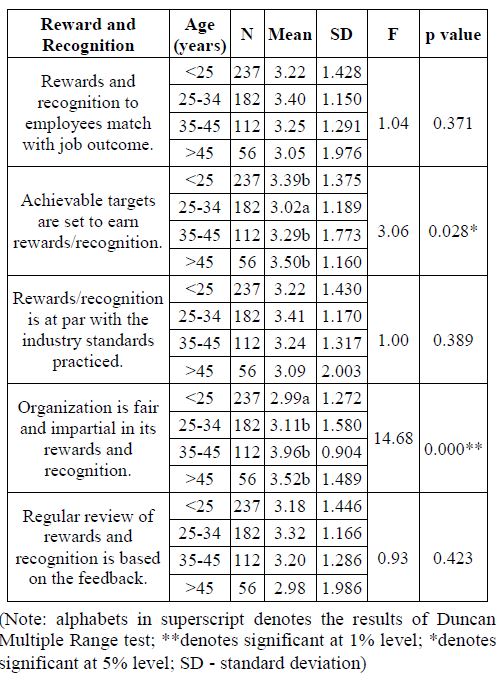
Table.3. Anova Test (Impact of Age on Reward and Recognition)
The Table.3 shows that the p value of “Organization is fair and impartial in its rewards and recognition” is 0.000 which is less than 0.01 and is statistically significant at 1% level and it can be said that there is significant difference among the age group of the respondents with respect to Organization is fair and impartial in its rewards and recognition. The p value of “Achievable targets is set to earn rewards/recognition” is 0.028 which is less than 0.05 and is statistically significant. It is concluded that there is significant difference among the age group of the respondents with the “Achievable targets are set to earn rewards/recognition”. The rest of the statements have p values greater than 0.05 and statically insignificant. Hence it is concluded that there are no significant differences among the age group of the respondents with respect to these rewards and recognition statements.
The Duncan Multiple Range Test is carried out for the two statements which have significant p values. The results for the statement “Achievable targets are set to earn rewards/ recognition.” show that the age group <25 years, 35-45 years and >46 year share similar views, while the age group 25-34 years differs significantly from all the other three age groups. The age group <25 years differs significantly from the other age groups which have similar opinion on the statement “Organization is fair and impartial in its rewards and recognition. Therefore, it can be inferred that there are significant differences among the age groups based on their perception towards the influence of reward and recognition on employee engagement among the employees in the IT companies.
The results given in Table.3 denote that the respondents have a mixed opinion about the rewards and recognition offered by the IT companies. The respondents opine that the reward and recognition offered by the companies is fair and impartial. They are found to feel that the targets set help to achieve the rewards and recognition. However, it has been observed that the rewards and recognition do not match with job outcome. The respondents prefer the organization to regularly review of rewards and recognition based on the feedback. It is further noted that the respondents do not consider the rewards and recognition is at par with the industry standards practiced. Therefore, the IT companies need to realise that they need to the reward and recognition offered to their employees as the employees consider it as a critical driver of employee engagement.
5.3 TESTING OF HYPOTHESES
The hypotheses are tested using one-way Anova test and Independent t-test.
H1: Age does not influence employee engagement among employees in IT companies in South Chennai - The hypothesis is tested using One-Way Analysis of variance (ANOVA). It helps to analyze how the mean of a variable is affected by different combinations of factors. The following sections throw light on the influence of age on employee engagement using ANOVA. The descriptive statistics of the relevant age groups are given in Table.4.
Using the descriptive statistics given in Table.4, the Anova test is conducted to test the first hypothesis “H1”. The Table.5 gives the results of the ANOVA test conducted on the age group of the respondents and employee engagement. It is observed that the p value is greater than 0.05 and is statistically insignificant. Based on the results of the One-way Anova, the null hypothesis is rejected and it is concluded that age has an influence on employee engagement among employees in IT companies in South Chennai.
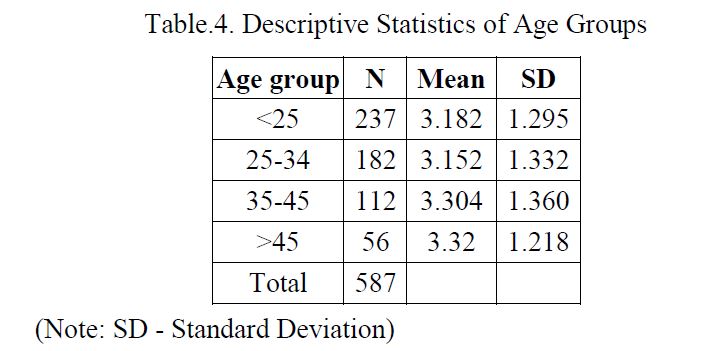
Table.4. Descriptive Statistics of Age Groups
The descriptive statistics given in Table.4 shows that the age group >45 years has the highest mean value. This may be because the employees in the age group are satisfied with the engagement initiatives of the companies or sometimes even, they may be adjusting themselves as they may find it difficult to find better job opportunities due to their age. It can be noted that the employees belonging to the younger age groups have better chances for getting jobs and hence they may be increasingly disengaged. The F value calculated also strengthens this point. Therefore, the organizations need to consider the age of the employees while formulating employee engagement strategies in IT companies in South Chennai.
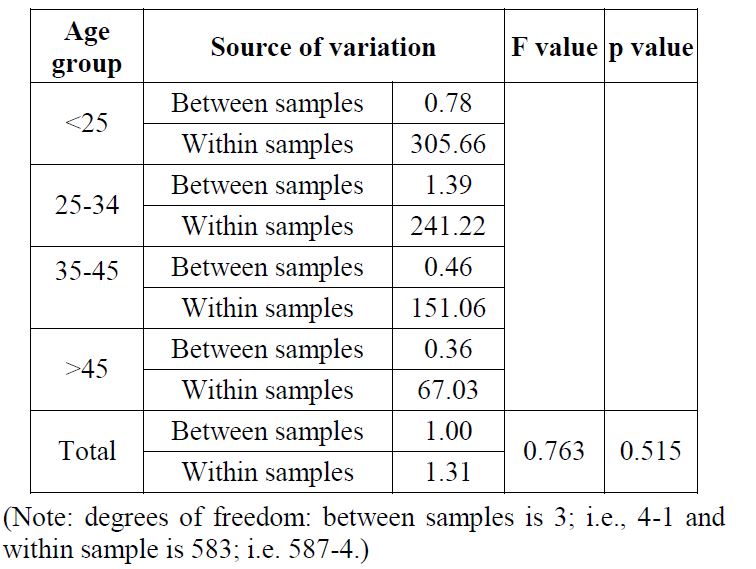
Table.5. Anova Test (Impact of Age on Employee Engagement)
H2: Gender has no influence on employee engagement among employees in IT companies in South Chennai – The hypothesis is tested using the Independent t-test. The Independent Samples t-test is used to find out whether there is any significant difference between male and female respondents with respect to the employee engagement drivers namely Superior, Performance Appraisal, Reward and Recognition and Employee Engagement in select IT companies in South Chennai city (Table.6).
It can be noted that all the p values except for employee engagement are greater than 0.05 and are statistically insignificant. Hence it is concluded that there no significant difference between male and female respondents with respect to the drivers of employee engagement in IT companies in South Chennai city. However, the p value is 0.037 for the employee engagement initiatives followed in the companies, which is significant at 5% level. The null hypothesis is thus, true for the influence of gender on the overall employee engagement initiatives of the IT companies in South Chennai.
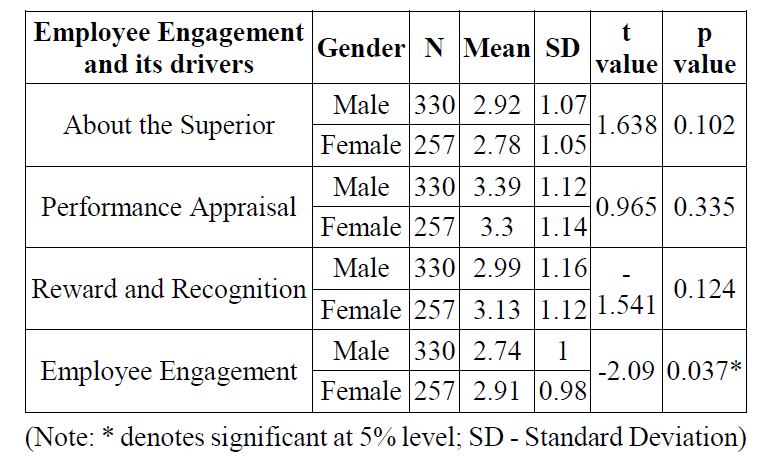
Table.6. Independent t-test for Studying the Influence of Gender
The results given in Table.6 indicate that the mean value for the female respondents, with respect to the driver- rewards and recognition is higher than male respondents. This indicates that female respondents are more engaged by the rewards and recognition offered by the organization. Similarly, the mean value for employee engagement is higher for female respondents and this indicates that they have shown a higher preference for the overall employee engagement initiatives in the organizations. This may be because the female employees in IT organizations are prefer to choose companies which have a record for high engagement levels. Thus, from the above analysis and interpretation, it is said that female employees tend to be more responding to the employee practices in the IT companies in South Chennai city.
6. FINDINGS OF THE STUDY
The aim of this paper was to understand the impact of the demographic variables on employee engagement. The findings of the study are as follows:
- The analysis of the demographic characteristics of the respondents shows that the number of female employees in the IT sector is increasing. Their desire to improve their standard of living and contribute to the well-being of their family has attracted more women to this sector.
- It is observed that majority of the respondents belong to the age group <25 years. This depicts the basic characteristic of the employees in the IT sector. The sector is known for employing a very young workforce.
- One-way ANOVA test was used to find whether there is any significant relationship between the age of the respondents and employee engagement among the employees in IT companies. Duncan Multiple Range test is further used to find the age group which are significantly different in their perception on employee engagement in the IT companies. The results of these tests show that age has a significant impact on employee engagement among the employees
- The H1 “Age does not influence employee engagement among employees in IT companies in South Chennai.” is tested using ANOVA test. The results show that the null hypothesis is rejected and therefore, it can be inferred that age of the respondent does influence the employee engagement initiatives in IT companies.
- The H2 “Gender has no influence on employee engagement among employees in IT companies in South Chennai.” is tested using Kendall’s W test. The results indicate that the null hypothesis is accepted as the p value is significant at 0.05% level. Therefore, it is concluded that there are no significant differences between male and female respondents with respect to employee engagement practices in the IT companies in South Chennai city.
7. CONCLUSIONS, LIMITATIONS AND SCOPE OF THE FURTHER STUDY
Chennai has number of factors such as strong infrastructure, government support, quality of human resources, strong track record of quality and delivery of IT services and products, which has made the city the second most-sought after destination by the IT companies. The companies are in dire need to concentrate on retaining their workforce due to huge demand for skilled employees. The employees need to be engaged through various HR practices such as career development, leadership, communication, monetary benefits, rewards and recognition.
Like any research, the study is subject to certain limitations, which also provides the basis for further research in the area. The limitations and scope for future research are:
(a) The demographic variables, namely, age and gender, have been selected based on their relevance. It is noted that there are certain other variables which are equally important such as occupation, tenure of service, educational qualifications. It would be interesting to include these variables in the study to get a clearer picture of the success of the employee engagement initiatives in the IT companies.
(b) The respondents were selected from South Chennai, where many IT companies have their offices. This study can be used as a reference to expand the study to a larger section of the city. This will help to comprehend the issues faced in engaging the employees at a larger scale.
c) The employment engagement practices may vary according to ethics and work culture of each company. This may be influenced by the origin of these companies – Indian or International. This factor has a wide scope for further research.
The study has attempted to analyse the impact of demographic variables such as age and gender on the employees’ perception towards the engagement practices of the companies. Globally, there have been various studies on the impact of the demographic variables on employee engagement in various sectors, especially the IT sector. The contribution of this sector to the growth of the Indian economy is tremendous. The extensive literature review hints that such studies are very rare in Chennai.
The contributions of the present study to the existing literature are as given below:
- The literature review points out that Bengaluru, Delhi and Noida have been the cities chosen in most of the studies. The studies on employee engagement in Chennai was mostly related to banking and manufacturing sector. Study of drivers of employee engagement in IT companies in Chennai city is relatively new. The IT sector in Chennai is flourishing day by day. This study is a beginning to widen the research on employee engagement among IT employees.
- IT sector is a sunshine sector of the Indian economy. Various studies have been conducted on the need for engaging the employees in the sector. The review of literature points out that research on drivers of employee engagement has been conducted on the impact of demographic factors such as position and length of service in the organization. However, it has been observed from the previous studies conducted globally that age and gender have a crucial influence on employee engagement. This study is a step towards research in this direction.
The intention behind this study was to help the IT companies to formulate relevant HR practices to engage their employees. The initiatives taken for the employee engagement are found to fail due to the increased rate of attrition in the IT sector. The companies need to focus on this and find newer and better ways to engage their employees, which will lead to increase in productivity and retention of their workforce.
REFERENCES
[1] W.A. Kahn, “Psychological Conditions of Personal Engagement and Disengagement At Work”, Academy of Management Journal, Vol. 33, No. 4, pp. 692-724, 1990.
[2] A.M. Saks, “Antecedents and Consequences of Employee Engagement”, Journal of Managerial Psychology, Vol. 21, No. 7, pp. 600-619, 2006.
[3] “Employee Engagement Research Update Beyond the numbers: A Practical Approach for Individuals, Managers, and Executives”, https://blessingwhite.com/wp-content/uploads/2014/06/Employee-Engagement-Research-Report-2013.pdf.
[4] Cliff Stevenson, “Performance Management: Sticking With What Doesn't Work”, Available at: https://www.i4cp.com/trendwatchers/2013/10/31/performance-management-sticking-with-what-doesn-t-work.
[5] Andorra, “The 2014 Global Workforce Study”, Available at: https://www. towerswatson.com/en/Insights/IC-Types/Survey-Research-Results/2014/08/the-2014-global-workforce-study
[6] Aon Hewitt, “2015 Trends in Global Employee Engagement”, Available at: http://www.aon.com/attachments/human-capital-consulting/2015-Trends-in-Global-Employee-Engagement-Report.pdf
[7] Daria Friedman, “Rewards and Recognition: Driving Engagement and Organizational Performance”, Available at: https://trainingmag.com/rewards-and-recognition-driving-engagement-and-organizational-performance
[8] J. Xu and H. Cooper Thomas, “How Can Leaders Achieve High Employee Engagement?”, Leadership and Organization Development Journal, Vol. 32, No. 4, pp. 399-416, 2011.
[9] David MacLeod and Nita Clarke, “Engaging for Success: Enhancing Performance through Employee Engagement”, Available at: http://webarchive.nationalarchives.gov.uk/20090609003228/http://www.berr.gov.uk/files/file52215.pdf.
[10] Luis R. Goomez-Mejiia, David B. Balkin and Robert L. Cardy, “Managing Human Resources”, 6th Edition, Prentice Hall, 2010.
[11] D. Robinson, S. Perryman and S. Hayday, “The Drivers of Employee Engagement”, Technical Report, Report-Institute for Employment Studies, pp. 1-87, 2004.
[12] W.B. Schaufeli and A.B. Bakker, “Job Demands, Job Resources, and their Relationship with Burnout and Engagement: A Multi‐Sample Study”, Journal of Organizational Behavior, Vol. 25, No. 3, pp. 293-315, 2004.
[13] I. Bakan, T. Buyukbese and B. Erşahan, “An Investigation of Organizational Commitment and Education Level Among Employees”, International Journal of Emerging Sciences, Vol. 1, No. 3, pp. 231-245, 2011.
[14] Ali Asadi, Fereshteh Fadakar and Zahra Khoshnodifar, “Personal Characteristics Affecting Agricultural Extension Workers Job Satisfaction Level”, Journal of Social Sciences, Vol. 4, No. 4, pp. 246-250, 2008.
[15] L. Eker, E.H. Tuzun, A. Daskapan and O. Surenkok, “Predictors of Job Satisfaction among Physiotherapists in Turkey”, Journal of Occupational Health, Vol. 46, No. 6, pp. 500-505, 2004.
[16] John E. Mathieu and Dennis M. Zajac, “A Review and Meta-Analysis of the Antecedents, Correlates, and Consequences of Organisational Commitment”, Psychological Bulletin, Vol. 108, No. 2, pp. 171-194, 1990.
[17] Manju K. Ahuja, Katherine M. Chudoba, Charles J. Kacmar, D. Harrison McKnight and Joey F. George, “It Road Warriors: Balancing Work-Family Conflict, Job Autonomy, and Work Overload to Mitigate Turnover Intentions”, Mis Quarterly, Vol. 31, No. 1, pp. 1-17, 2007.
[18] Jack J. Baroudi and Magid Igbaria, “An Examination of Gender Effects on Career Success of Information Systems Employees”, Journal of Management Information Systems, Vol. 11, No. 3, pp. 181-201, 1994.
[19] Naval Garg, “Employee Engagement and Individual differences: A Study in Indian Context”, Management Studies and Economic Systems, Vol. 1, No. 1, pp. 41-50, 2014
[20] Amanda Ferguson and Jane R. Carstairs, “Employee Engagement: Does It Exist, and if So, How Does it Relate to Performance, Other Constructs and Individual Differences?”, Australian Journal of Psychology, Vol. 57, pp. 125, 2007.